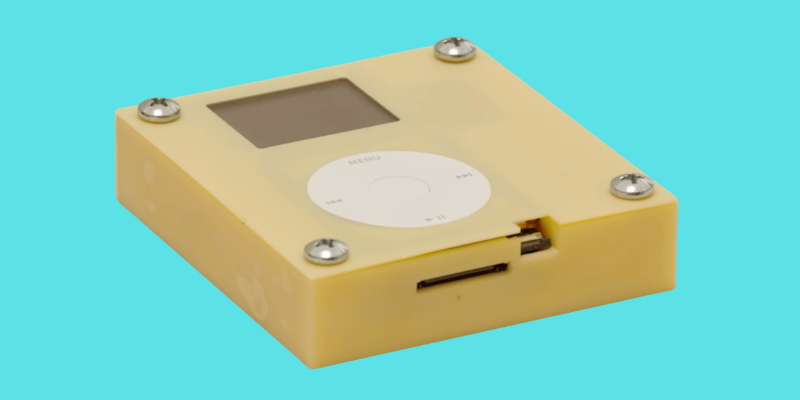
Ever wondered what a prototype iPod looked like? How about a prototype iPhone, or Apple Watch? Wonder no more! Apple has shared these and more for their 50th anniversary celebrations with the Wall Street Journal.
Apple has revealed several prototypes of their early attempts at creating various iconic products. The Wall Street Journal had the opportunity to join Tim Cook to look back through the last 50 years of innovation and discuss the early days of what made Apple the company it is today.
During the video, we got an inside look at the first ever iPod, alongside an iPod prototype.
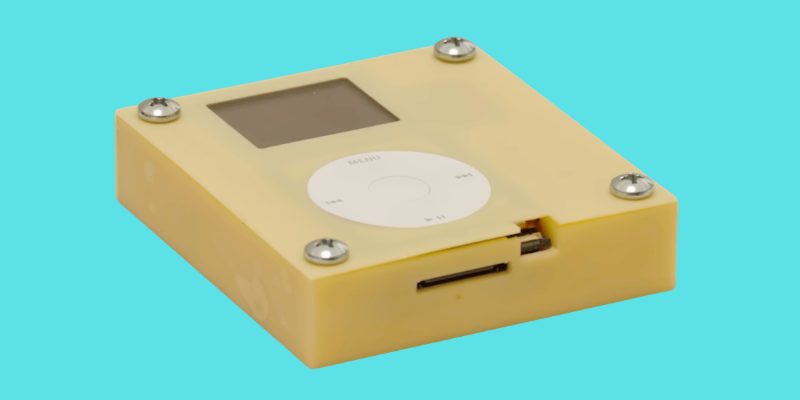
The iPod prototype pictured here shows a different design than the one we’ve come to know, but the core aesthetics and life of the product’s vision is clearly still visible, with a click wheel and screen we all remember from the iPod’s history. Tim Cook talked in the video about the challenges involved with scaling the supply chain to support a product that quickly went from a few iPods up to hundreds of millions. We all know how incredible the iPod’s success was, but it’s amazing to see its humble beginnings shared with us.
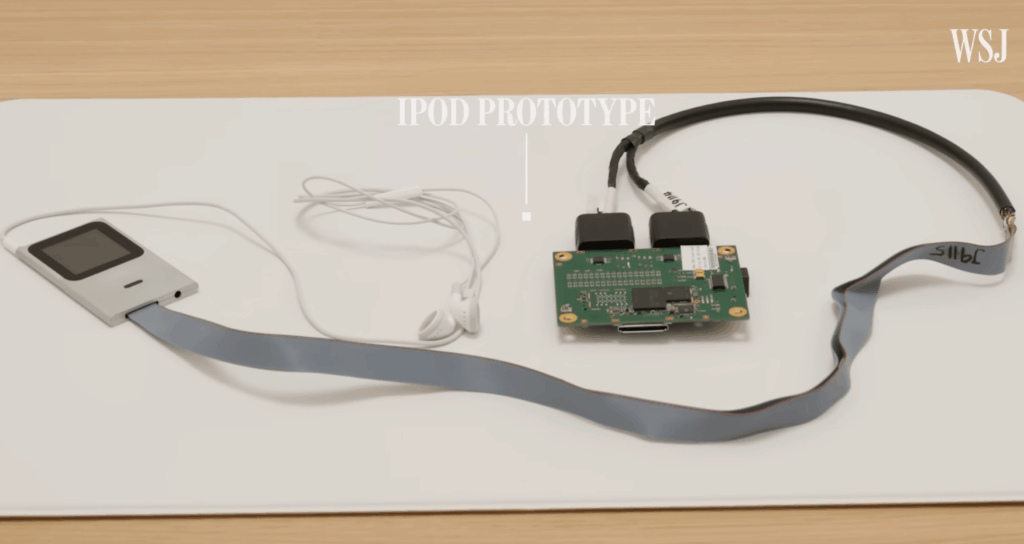
In the video, they also showcased this prototype of the early iPods, too. I’m not entirely sure which iPod version this would be a prototype for, it looks awfully thin to be an early iPod classic. Perhaps this was before they decided how big it needed to be, or perhaps it was a work in progress for the 3rd generation nano which likely would be about this size once its click wheel was added. Plus, the nano 3rd generation did indeed have it’s 3.5mm jack at the bottom, unlike the classics.
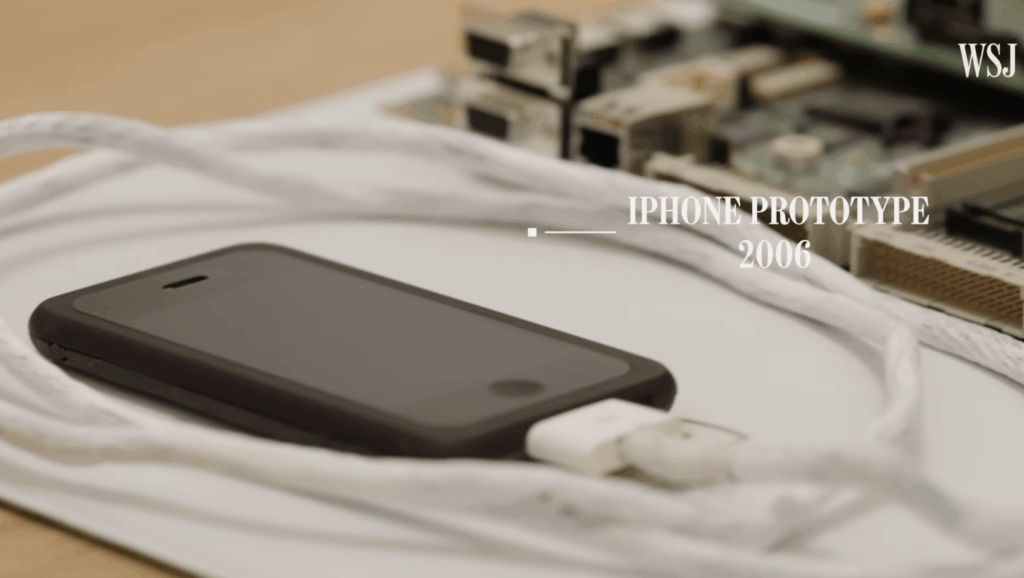
Naturally most viewers will likely have been drawn to the prototype of the original iPhone. iPhone has been Apple’s defining success of the modern age, completely transforming the company and taking the foundations that the iPod laid to a whole new level. It’s quite incredible to see this early prototype from 2006, complete with PC IO ports on the logic board for testing. It does make one wonder how this shape and design came to be, and how they managed to fit all of that computing inside such a small device. Tim Cook quipped that they “had to make sure it worked, before attempting to make it small” which naturally makes complete sense. There’s little point in making a device which fits into the dimensions you would like, but doesn’t actually function how it is intended!
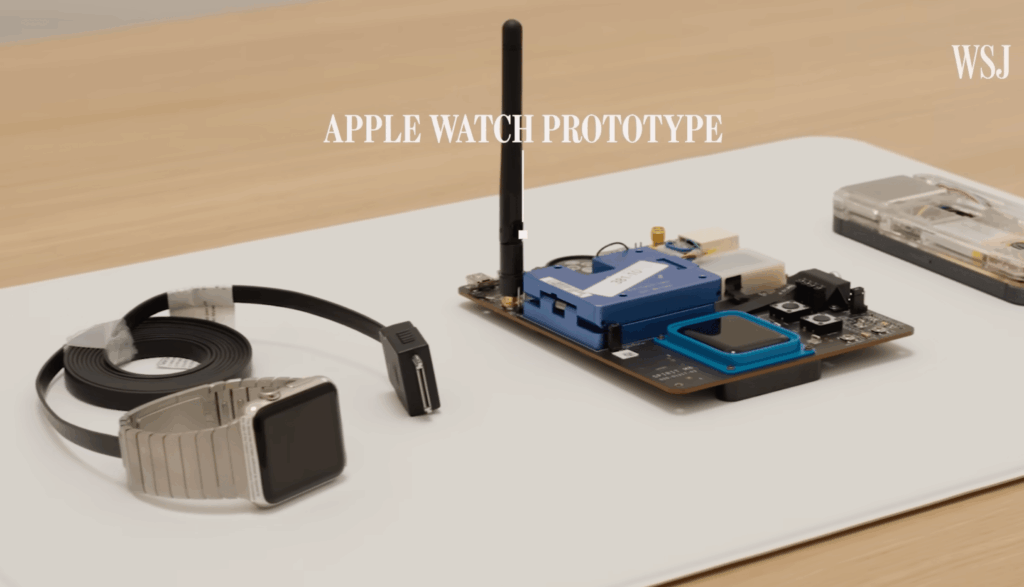
Lastly we got a look at the first Apple Watch’s prototype. Tim Cook noted that this was actually the Apple Watch he wore on stage during the announcement at the 2014 Apple event showcase. It’s quite interesting to note the watch’s progress from prototype to a working device. Taking the power and usability of iPhone, shrinking it down and then redesigning the interface to make it simpler and less annoying to interact with at the size of a watch was likely no easy feat, but I do feel Apple has accomplished this in one of the most elegant ways we’ve seen in comparison to other smart wearable companies.
Naturally for me personally, the most exciting prototype to see and hear discussions about was the iPod. The iPod continues to be one of my favourite products ever, not just Apple products but of all the technology I have used in overall. It had one simple function: to give you access to 1,000 songs in your pocket. Music wherever you go, without the limitations of CDs and buying whole albums. iTunes and the iPod completely revolutionised an industry and in turn redirected Apple’s vision to adapt from Apple Computer into the Apple company we know today, focused on much more than just computing.
The iPod is from a time before algorithms sucking up all of our time, or social media giants demanding our attention through addictive infinite doomscrolling. It required intentionality. It brought you to use it because of the single purpose it fulfilled, and it fulfilled that purpose well. This is why I still use an iPod to this day. I have an iPad Pro, a Mac mini, MacBook Pro, iPhone Air and my Apple Watch. I am fully integrated into this ecosystem. But sometimes I just want to leave those devices at home, grab my iPod, and go on a nice walk. No notifications, no being tracked, no one knowing where I am at every moment, not being contactable on a whim. There’s something relaxing and enjoyable about that experience.
I’m really grateful that Apple allowed the Wall Street Journal to see these prototypes and share them with us. While Apple is well known for being a private company who rarely look backwards, it’s nice to see them acknowledge the products of the past that truly did shape so many of our lives. Plus it was interesting to know they have kept all of these old products all these years! They should open an Apple Museum at Apple Park. I reckon that’d pull in some revenue if they charged for entry!
Full image credit to the Wall Street Journal YouTube Channel.
Leave a Reply